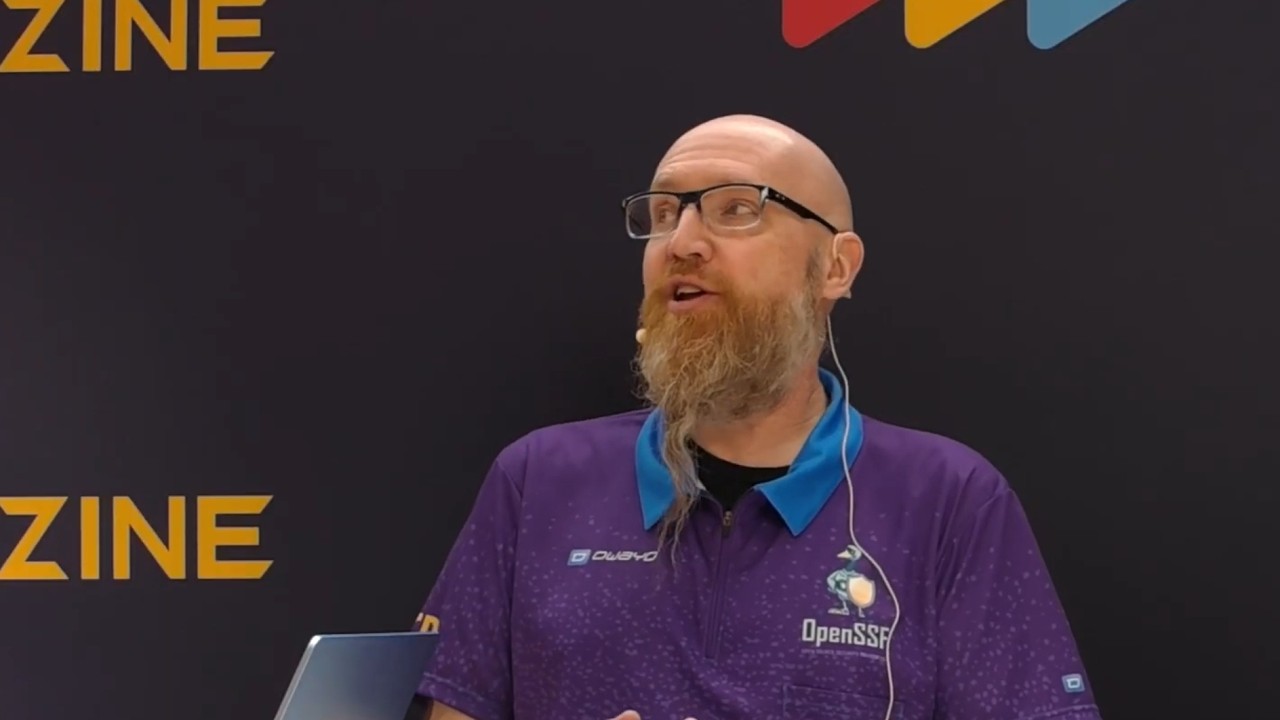
CTO of OpenSSF, Christopher Robinson, aka CROB discusses his prediction of a major AI-based cyber attack in 2026 and the mounting security challenges facing open source maintainers. From AI-generated denial of service attacks through malicious pull requests to sophisticated nation-state threats leveraging frontier AI models, the open source ecosystem faces unprecedented pressure.
The conversation explores real-world attack patterns including the XZ Utils incident, where coordinated sock puppet accounts attempted to merge malicious packages. CROB explains how AI hallucinations create security vulnerabilities when developers trust AI-generated code without proper review, and how the EU Cyber Resilience Act will amplify these challenges as thousands of manufacturers submit vulnerability patches simultaneously.
Key takeaways:
• Why AI-accelerated attacks will outpace enterprise security team response times
• How malicious actors exploit AI hallucinations through dependency confusion attacks
• The XZ utilities attack pattern and coordinated social engineering tactics
• Vibe coding risks when developers accept AI suggestions without verification
• How the EU Cyber Resilience Act creates new attack opportunities for bad actors
• Tools and education OpenSSF provides to help maintainers combat AI threats
• Why traditional security principles must extend to AI development practices
Chapters:
0:00 – Introduction to OpenSSF and AI security
0:26 – Predicting the major AI attack
0:52 – AI reports overwhelming open source maintainers
2:24 – Nation state threats and zero-day attacks
4:30 – The XZ utilities attack pattern
6:57 – Protecting repositories from malicious code
9:11 – The dangers of AI vibe coding
10:59 – EU Cyber Resilience Act and vulnerability handling
16:30 – Implementing secure by design for AI tools
Keywords: AI security, open source security, OpenSSF, XZ utilities attack, vibe coding, AI hallucinations, dependency confusion, nation state threats, EU Cyber Resilience Act, malicious packages, NPM security, supply chain attacks, secure by design