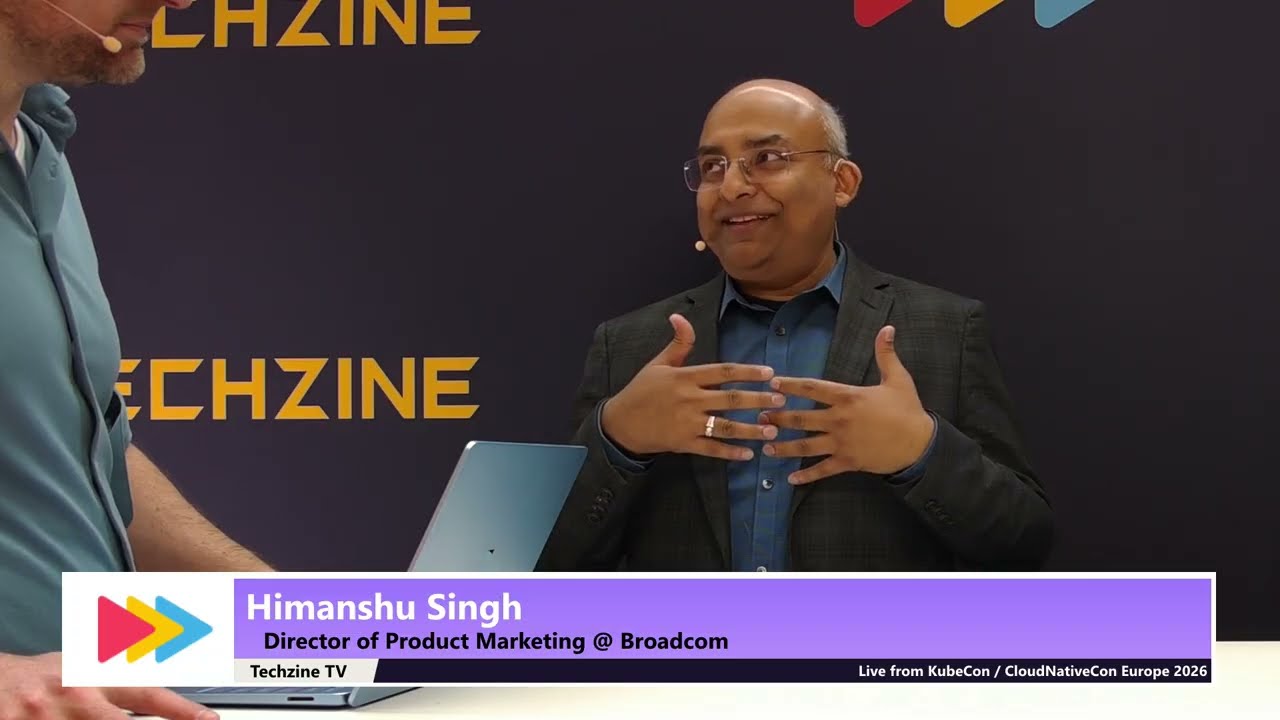
Himanshu Singh, Product Director at Broadcom VMware, explains how vSphere Kubernetes Service (VKS) delivers CNCF-certified Kubernetes runtime within VMware Cloud Foundation. Learn why containers running in VMs provide enhanced security through six layers of isolation, the same approach used by hyperscalers.
Discover how VKS enables IT teams to manage both VMs and Kubernetes clusters from a single control plane, eliminating silos while giving platform teams self-service capabilities. Singh discusses the unopinionated approach to Kubernetes, maintaining compatibility with upstream releases within two months, and supporting bring-your-own CNI options like Calico, Cilium, and others.
Key takeaways:
• VKS provides CNCF-certified Kubernetes with 24-month support and n-2 version compatibility
• Containers run in VMs for enterprise-grade security, reliability, and lifecycle management
• Single platform eliminates the need for separate VM and container infrastructure
• Validated integrations with F5, Tigera, Kong, and other cloud native leaders
• Bring-your-own CNI support introduced in VKS 3.6
• Complete inclusion in VCF licensing with no additional costs
• IT teams gain governance while developers get self-service flexibility
Chapters:
0:07 – KubeCon introduction and vSphere Kubernetes history
1:40 – vSphere Kubernetes Service and CNCF certification
3:11 – Kubernetes as vSphere control plane
4:27 – Enterprise-grade features without vendor lock-in
6:05 – Why VMs and containers will coexist
9:47 – CNCF ecosystem integrations and CNI options
12:32 – Business benefits and total cost of ownership
13:48 – VCF licensing and what’s included
Keywords: vSphere Kubernetes Service, VKS, VMware Cloud Foundation, VCF, CNCF certified Kubernetes, container security, Kubernetes control plane, CNI, Calico, Cilium, enterprise Kubernetes, cloud native, KubeCon