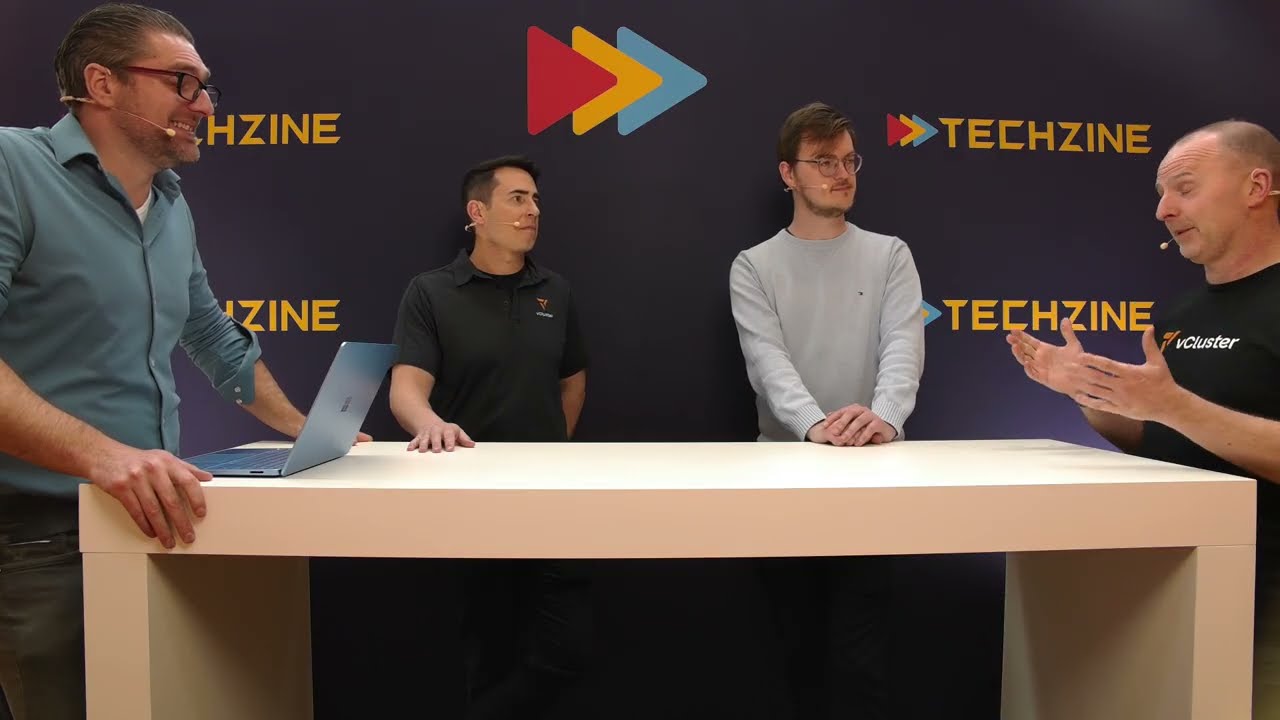
At KubeCon and Cloud NativeCon, we spoke with Tom Brightbill, head of product at vCluster, and Laurie Maclachlan, head of international sales, about their innovative approach to Kubernetes virtualization. vCluster helps organizations maximize GPU utilization by virtualizing Kubernetes clusters, enabling faster deployment and better resource management.
The company serves a diverse customer base, from NeoCloud providers building greenfield GPU infrastructure to large enterprises seeking to reduce cluster sprawl. By adding a virtualization layer on top of Kubernetes, vCluster enables teams to spin up clusters rapidly, share GPU resources efficiently, and maintain strong isolation between tenants. The platform extends down to bare metal provisioning, helping customers transform racks of GPUs into managed services in record time.
Key takeaways:
• vCluster virtualizes Kubernetes clusters to improve GPU utilization and operational efficiency
• The platform offers both shared cluster and virtual control plane deployment models
• Bare metal provisioning capabilities accelerate time-to-value for GPU data centers
• Developer experience focuses on speed and automation using Kubernetes-native tools
• Security is enhanced through stronger isolation compared to traditional namespacing
• The NeoCloud market is expanding rapidly with hundreds of new providers emerging
• Future roadmap includes additional AWS-like managed services beyond Kubernetes
Chapters:
0:13 – Introduction to vCluster
0:31 – GPU utilization and virtualization
1:10 – Bare metal provisioning capabilities
2:49 – Developer experience and simplicity
4:23 – Customer base and use cases
4:40 – NeoCloud and sovereign cloud opportunities
12:18 – Security and isolation benefits
17:54 – Future innovation and product roadmap
Kubernetes virtualization, GPU utilization, bare metal provisioning, NeoCloud, sovereign cloud, vCluster, container orchestration, multi-tenancy, developer platform, cloud native infrastructure