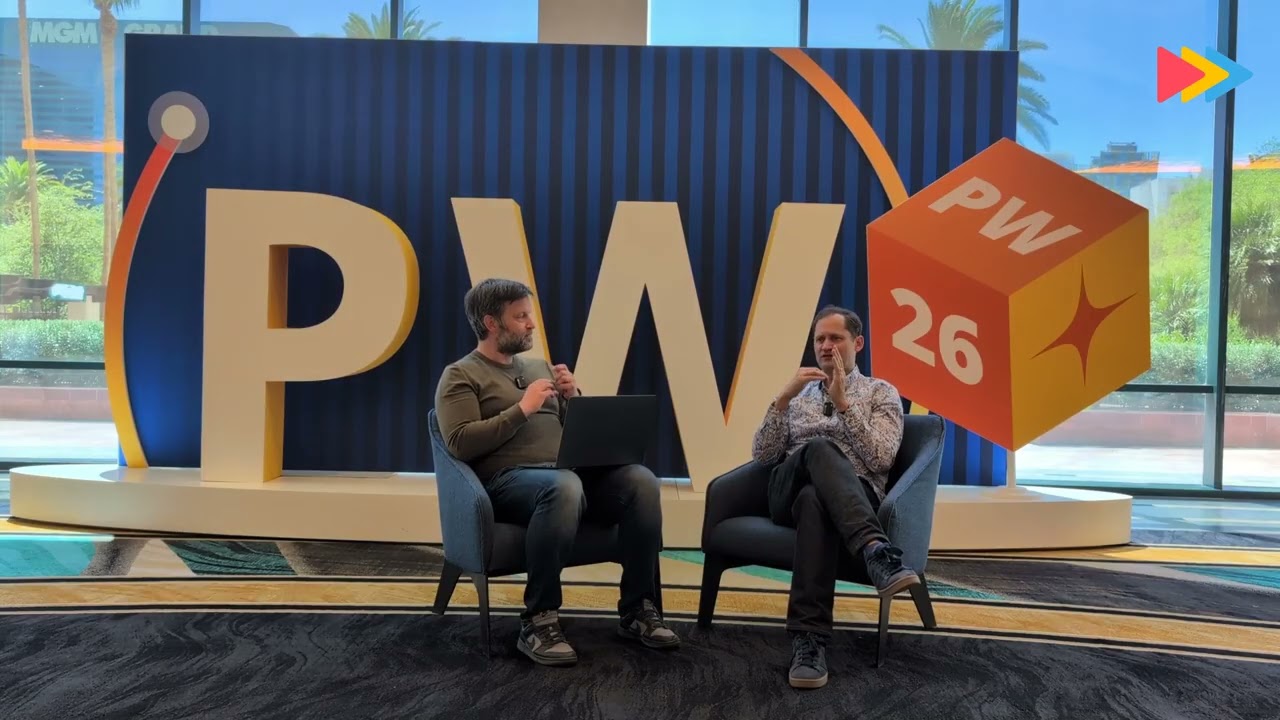
Enterprise AI is not broken, but the way most companies are approaching it might be. In this Techzine TV interview from PegaWorld in Las Vegas, Pega CTO Don Schuerman challenges some of the most widely held assumptions about AI adoption, and what he shares might make you rethink your entire approach.
If your organization is investing in AI, you are almost certainly facing the same dilemmas Schuerman discusses in this conversation. How do you make AI outcomes reliable enough to trust at scale? How do you keep costs from spiraling out of control as token consumption grows? And how do you get from a great AI-powered process design to an application that actually runs in production?
These are not theoretical questions. Schuerman gets into examples and tries to give answers. The reasoning behind those answers challenges conventional wisdom about where AI belongs in the application lifecycle.
What this interview covers
A number that should make every enterprise nervous
Schuerman cites a statistic about AI accuracy that sounds reassuring until you do the math. Once you hear his reasoning about what happens when multiple agents are chained together, you will never look at an AI accuracy benchmark the same way again. Watch the interview to find out what the real reliability number is, and what Pega wants to do about it.
The token cost crisis no one is talking about loudly enough
Token-based AI pricing is creating a hidden financial risk for enterprises. Some organizations have already started reversing their AI investments because of it. Schuerman explains what is driving this and reveals the architectural strategy Pega uses to make costs predictable, and what that enables in terms of a completely different pricing model.
Blueprint: the story behind the two-year journey
Pega Blueprint launched two years ago and the initial reaction from many observers was positive but cautious. In this conversation, Schuerman talks about what changed in the last few months that made the real expansion of Blueprint possible, and why the timing was not arbitrary. The answer involves a quiet but significant shift in what agentic AI is now capable of.
What an application actually needs to be in the AI era
Schuerman offers a fresh take on what enterprise applications should look like going forward. The gap between that vision and where most organizations are today is significant. He also explains how MCP fits into this architectural shift, and what the phrase “apps become MCP targets, screens become skills” actually means in practice.
A new pricing model that only works if the architecture works
Pega has shifted to outcome-based pricing. Schuerman explains exactly why that is possible for Pega when other vendors have stumbled trying to offer similar value propositions. The explanation comes down to something specific about how Pega’s platform is built, and it’s worth hearing directly from the CTO.
Next best action, for people who don’t speak data science
Pega’s next best action capability is well established, but it has historically required specialist skills to unlock. Schuerman explains what the new Customer Engagement Studio is designed to change, and who it is specifically intended to bring into the fold. If you have marketing teams who feel locked out of decisioning capabilities, this part of the interview is for you.
Key questions answered in this interview
- Why dropping AI tools into existing workflows is not the same as reimagining them
- What the real risk of chained AI agents is, and how to contain it
- Which stage of application development should use which type of AI
- How two years of Blueprint development led to a breakthrough that only became possible recently
- What it means for apps to become MCP targets
- How outcome-based pricing works when token costs are inherently variable
- What Infinity 26 enables for enterprises that want to use their own AI models
- How to actually measure whether your AI transformation is succeeding