Every enterprise has an AI agent sprawl problem. Multiple agents from multiple vendors, running across multiple platforms, with little visibility into what they’re actually doing — or whether they’re allowed to do it. Atlassian thinks it has the answer, and they call it AMP.
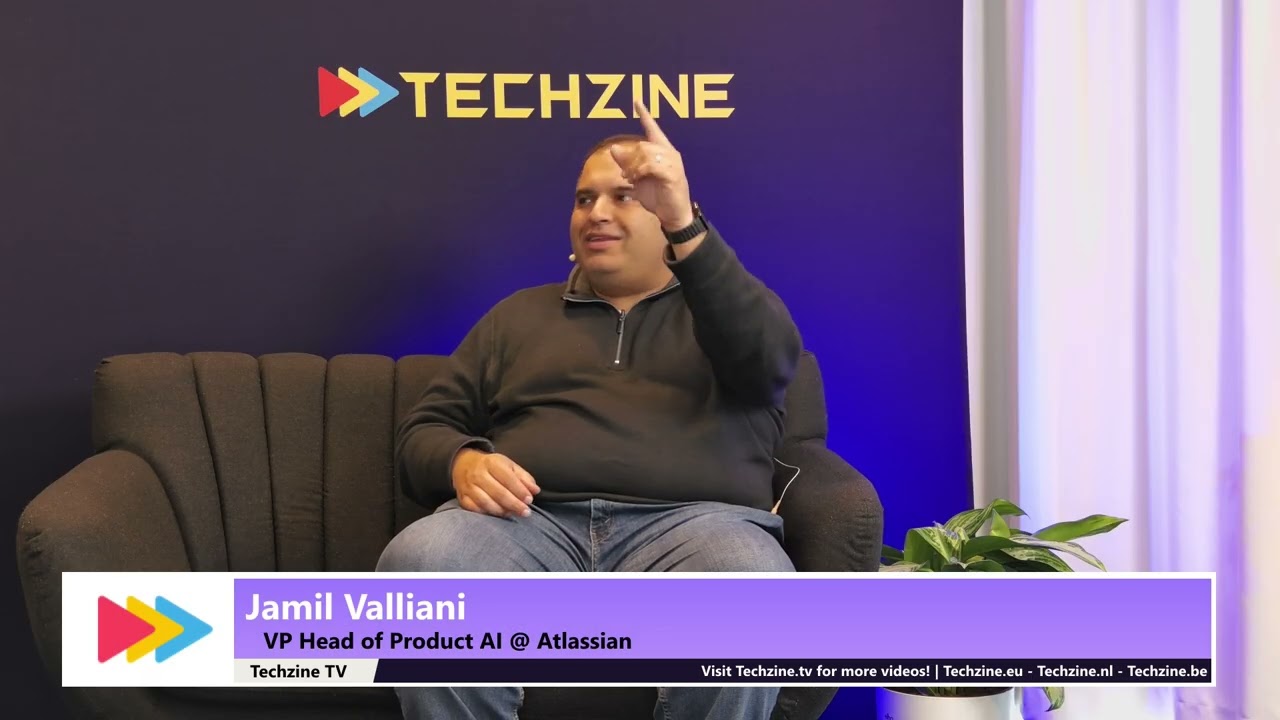
At Atlassian Team in Europe, Techzine TV sat down with Jamil Valiani — Vice President and Head of Product AI at Atlassian — for an in-depth look at AMP, the Agentic Multiplayer Protocol. Announced during the event’s keynote, AMP is one of the most ambitious AI architecture bets any enterprise software company has made. But what exactly is it, how does it work, and does it live up to the ambition?
In this exclusive interview, Valiani goes deep on the architecture, the philosophy, and the very real governance challenges that AMP is designed to solve — challenges that many organizations are already hitting right now, before AI adoption has even reached its peak.
What you will discover in the video
This conversation covers ground that goes far beyond a standard product announcement. Valiani unpacks the full AMP stack — from the foundational role of the teamwork graph to the newest interaction innovations — and explains why Atlassian believes it is uniquely positioned to tackle these problems holistically.
The big questions this video answers
If you are trying to understand where enterprise AI governance is heading, or if your organization is grappling with a growing fleet of AI agents you do not fully control, this interview addresses questions you are probably already asking:
- What does AMP actually mean for how agents and humans work together — and is it really more than marketing?
- How does Atlassian plan to bring agents from OpenAI, Anthropic, Cursor, and Figma into a single governed environment without replacing the standards those agents already use?
- What happens to agent activity that takes place entirely outside the Atlassian platform — can it really be captured and made useful?
- What is the non-human identity inventory, and why might it become one of the most important tools in an IT admin’s arsenal?
- What is Rovo Work, and what safeguards prevent a long-running autonomous agent from going off the rails?
- What does a least-privilege model look like when applied not just to human admins but to AI agents?
- Is this framework genuinely designed for knowledge workers, or is it another developer-first tool repackaged for a broader audience?
- What does Atlassian recommend for organizations that have been holding back on AI adoption because governance felt out of reach?
Why this matters now
The conversation also touches on something most vendor briefings avoid: the real organizational anxiety around agentic AI. Valiani is candid about the fact that many enterprises have deliberately slowed AI rollout because they lack the tools to govern what agents are doing. AMP is positioned as the framework that removes that blocker.
Valiani also introduces a feature that reframes how humans communicate with AI agents entirely — and the reasoning behind it may shift how you think about human-agent collaboration. Watch the full interview to find out whether Atlassian AMP is the missing governance layer the enterprise has been waiting for.