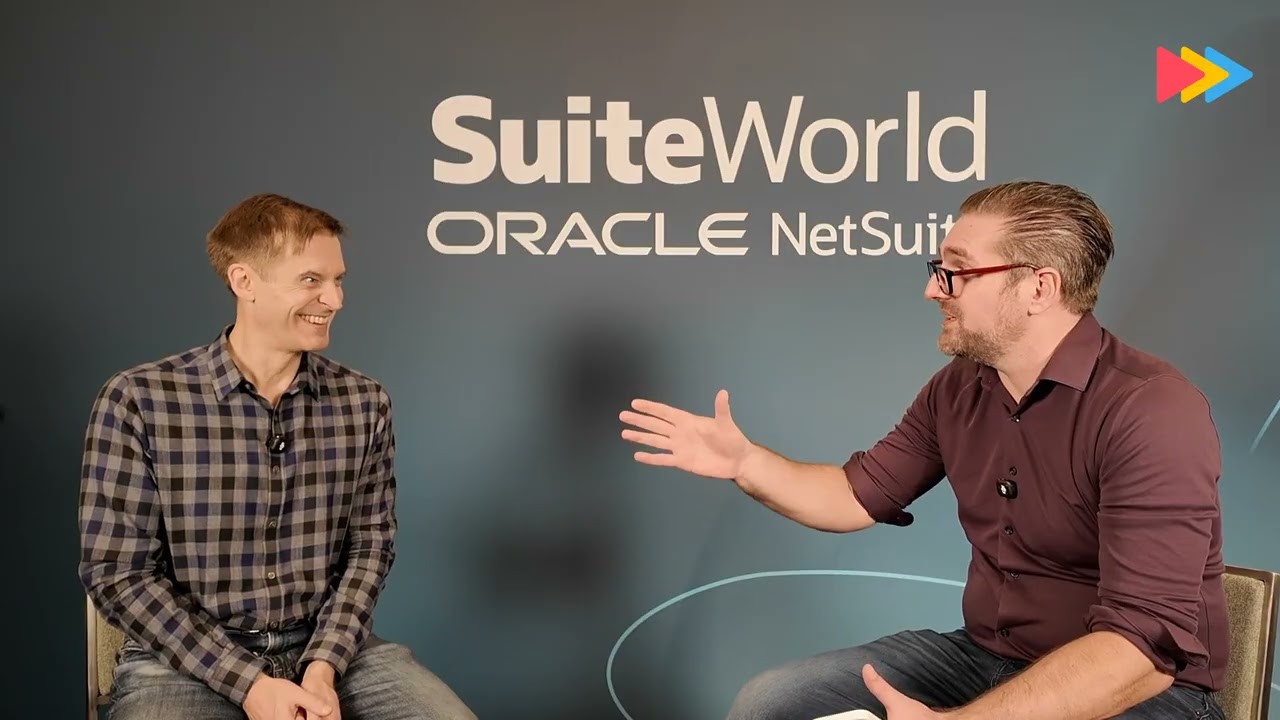
What does it actually take to build AI into the core of an ERP system — not as a bolt-on, not as a chatbot wrapper, but as a genuine architectural layer? Techzine TV got a rare, deeply technical answer at SuiteWorld.
Brian Chess, SVP AI Product and Technology at Oracle NetSuite, sat down with us to walk through the decisions, trade-offs, and engineering thinking behind NetSuite Next. This is not a product demo or a marketing overview — it is a candid, technical conversation with the person who led the rebuild.
If you work in enterprise technology, run a NetSuite instance, evaluate ERP platforms, or care about how agentic AI actually gets implemented in production software, this interview is worth your time. Here is a taste of what Brian reveals in the video — without giving away the full picture.
There is a lot more going on than a new UI
The NetSuite Next rebuild started years before generative AI was a mainstream topic. Brian explains what the team was actually trying to solve, why the timing turned out to be fortunate, and what the foundational architectural decisions were that made everything else possible. The answer is more nuanced than you might expect.
The three-party model that changes everything
Brian introduces a framing for how AI changes the relationship between software and its users — and why that shift required rethinking how APIs and user interfaces are designed. The implications are significant for any vendor building AI into enterprise software, not just NetSuite.
An MCP server with only a dozen tools — and a compelling reason why
Oracle NetSuite’s AI Connector Service is built on the MCP protocol. Brian explains why the standard toolset is deliberately small, how it achieves significant power from that simplicity, and what distinguishes this approach from the “MCP layer over existing APIs” approach that many other vendors are taking. The answer touches on documentation, permissions, and extensibility in ways that are worth hearing directly.
AskOracle: not what you might think it is
The AskOracle that runs inside NetSuite is a different technology from the AskOracle found elsewhere in the Oracle ecosystem. Brian explains what the NetSuite version actually is under the hood, why it includes a full agent harness, and what it means that a conversation can become an agent with a single instruction. He also explains why showing data sources — not just answers — was a deliberate design choice rooted in human behavior.
Key questions the video answers
- Why does AI inside NetSuite sometimes take tens of seconds — and is that a problem?
- How does Oracle think about context window management as AI matures?
- How does the permissions model for AI compare to the permissions model for employees?
- What happens in the audit logs when an AI agent makes a change on a user’s behalf?
- How hard is the actual upgrade path for existing NetSuite customers?
- Are existing partner integrations at risk when upgrading to NetSuite Next?
Candid answers, not a sales pitch
Brian does not claim the system is fully optimized. He acknowledges the trade-offs between accuracy and speed, the ongoing work on context management, and the user experience challenges that come with any major platform transition. That candor makes this one of the more valuable ERP and AI conversations we have had this year. Watch the full interview to hear it in his own words.