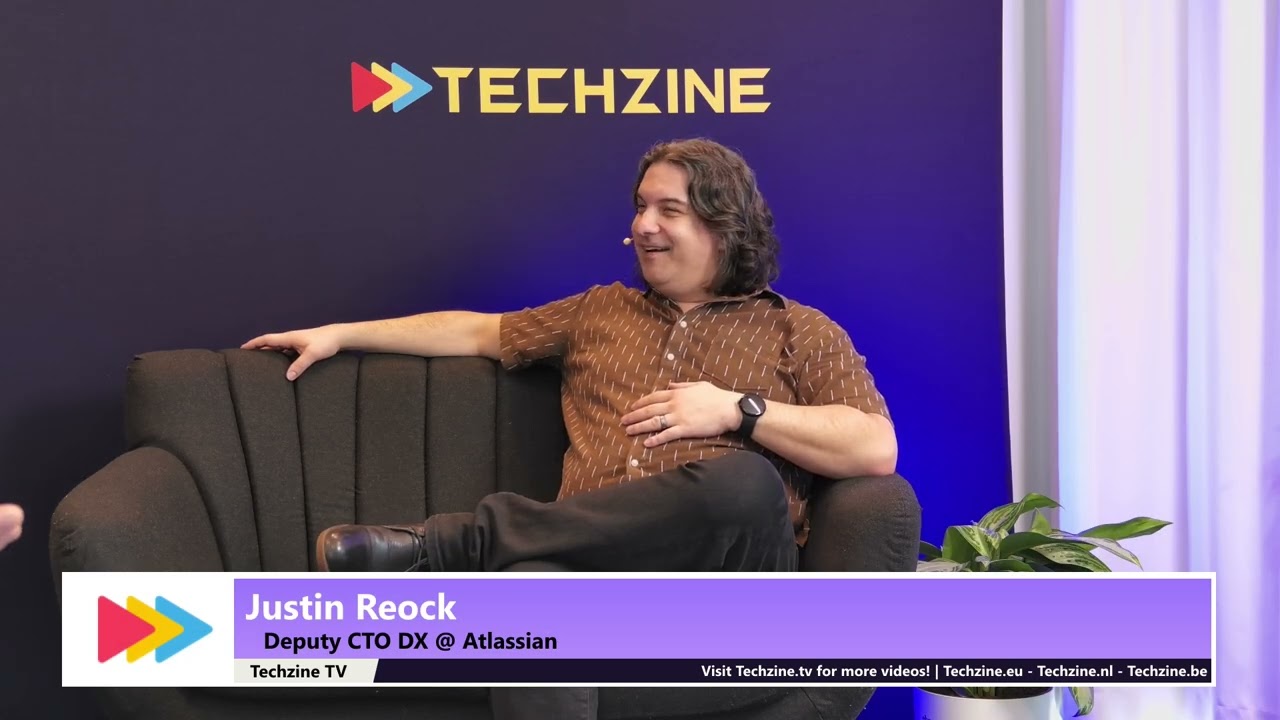
The metrics say one thing. The AI hype says another. Justin Rijork, deputy CTO of DX at Atlassian, sits down with Techzine TV at Atlassian Team in Amsterdam — and the data he brings to the table will make you rethink what you thought you knew about AI, developer productivity, and code review.
DX has been measuring developer experience for five years, across teams ranging from 30 to over 30,000 engineers. Now part of Atlassian, DX brings together a research team that includes names behind the DORA metrics, the SPACE framework, and the DevEx framework — and they’ve distilled all three into something entirely new. In this Techzine TV interview, Justin Rijork walks through what that means in practice, and what the data is actually revealing about AI’s impact on software teams right now.
This is not a conversation about promises. It’s a conversation about signals, tensions, and hard truths — backed by data from millions of data points across real engineering organizations. Whether you lead an engineering team, work in developer tooling, or are simply trying to make sense of AI’s role in the software development lifecycle, this interview contains insights you won’t find in vendor whitepapers.
What you’ll discover in this video
Justin covers a remarkable amount of ground in under 28 minutes. Here’s a taste of what’s waiting for you — without spoiling the conclusions:
- Why three of the most respected developer productivity frameworks were not enough — and what DX built instead
- How DX achieves participation rates that most survey teams can only dream of, and why that changes what the data can tell you
- What the single biggest productivity drain for engineers consistently turns out to be (it’s probably not what you’d guess)
- A new and unexpected tension that AI is creating between two developer experience metrics — and what it signals about trust
- What happens to the full delivery lifecycle when you compare heavy AI users to lighter AI users — the answer is counterintuitive
- Justin’s controversial hot take on whether the ROI of AI in software development actually exists right now
- Why code review may be approaching a breaking point — and what principles from the past might solve a very modern problem
- The neuroscience behind developer joy, and why it’s a measurable business outcome, not just a feel-good concept
- A real-world example of how one company is using AI agents to grow its engineering team rather than shrink it
Why this interview matters now
The conversation around AI and software development is often dominated by either uncritical enthusiasm or sweeping skepticism. What’s rare is someone who can point to actual delivery lifecycle data, actual survey participation numbers, and actual metric correlations — and use them to explain what’s really happening inside engineering organizations in 2024 and 2025.
Justin Rijork does exactly that. And along the way, he raises questions about the future of code review, the evolving role of senior engineers, and whether the industry is about to rediscover some very old principles under very new names.
Hit play. This is one of the more data-rich conversations about developer experience you’ll find anywhere.