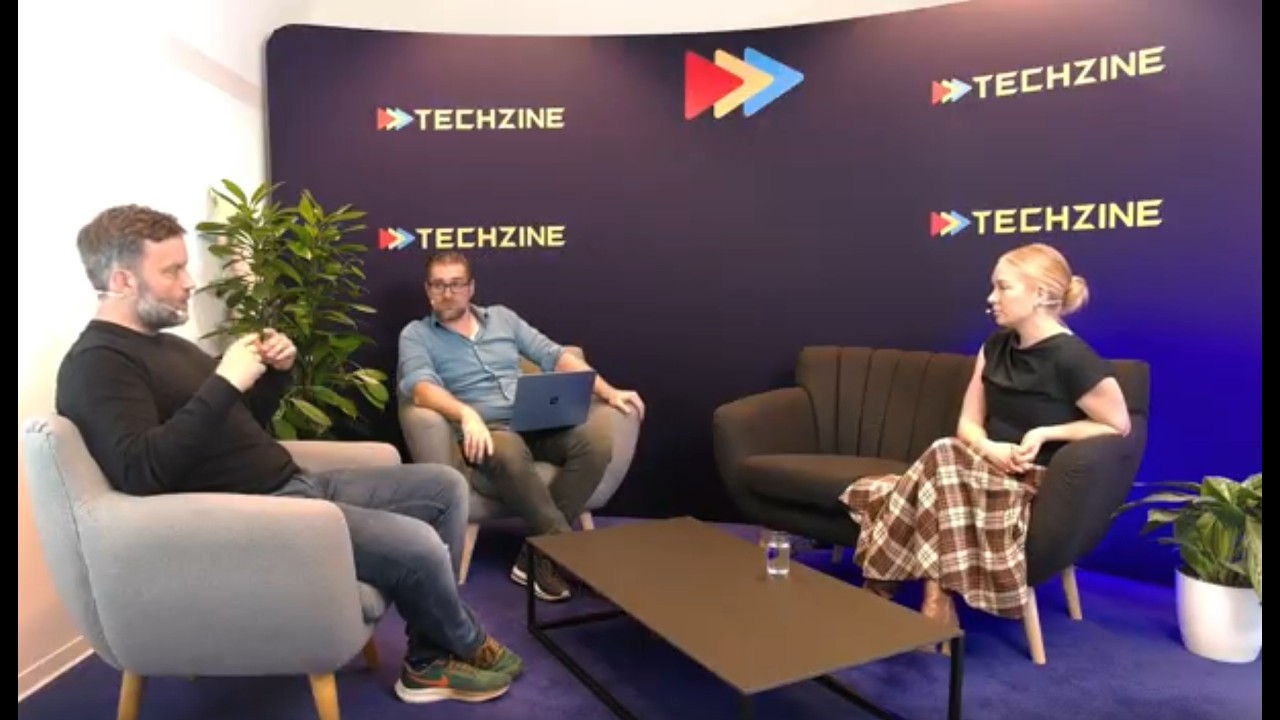
Most organizations are deploying AI tools and hoping for the best. Atlassian is running controlled experiments, measuring what actually happens, and feeding the results back into how millions of teams work. In this episode of Techzine TV, you get an inside look at how that really works — from the people doing it.
At Atlassian Team ’26 Europe in Amsterdam, Techzine TV spoke with Molly Sands, head of Teamwork Lab — Atlassian’s internal research and innovation group staffed with PhD behavioral scientists, data scientists, designers, and change experts. What Teamwork Lab is learning about the future of work is not theoretical. It is being tested on real teams, measured with real data, and built into real products.
In this interview, Molly shares findings and insights that challenge some of the most common assumptions organizations make about AI, productivity, team performance, and how change actually happens at scale. Some of what she reveals is encouraging. Some of it is genuinely surprising. All of it is relevant if you are trying to make AI work inside your organization.
What you will discover in this interview
This conversation covers territory that most AI and future-of-work discussions avoid — the messy, human, hard-to-measure reality of what happens when organizations try to transform how they work. Molly goes beyond high-level advice to share concrete research results, including findings that may change how you think about your own AI strategy.
Key topics explored
- The surprising truth about how easy — or hard — it actually is to get managers and teams to change how they work
- What Atlassian discovered when they showed the same piece of work to 1,000 people — with one critical difference
- Why only 6% of executives can clearly point to ROI from AI, and what that means for how your organization should be measuring value
- How knowledge worker roles are shifting in ways that defy the single builder narrative you keep hearing
- What Atlassian’s internal Protobox experiment reveals about how to scale specialized skills without sacrificing quality
- Whether best practices for AI-enabled teamwork hold up across different cultures, geographies, and industries
- The one organizational factor that can neutralize a major and measurable social cost of AI use at work
- How Atlassian thinks about its own employees as a living test environment, and what that means for the products it ships
Why this interview matters
Teamwork Lab is not studying AI adoption from the outside. Atlassian positions itself as customer zero — every tool it builds, every experiment it runs, is tested internally first. Molly Sands has access to platform data, global survey results, and direct experimentation with real teams across a 25-year-old enterprise managing billions of lines of code. That combination of scale, rigor, and real-world constraint makes her perspective unusually grounded.
If your organization is trying to figure out how to measure AI’s impact, how to protect the conditions that make knowledge workers effective, or how to build a culture where transformation actually takes hold — this interview has something concrete for you. Hit play and find out what Atlassian has learned the hard way so you do not have to.