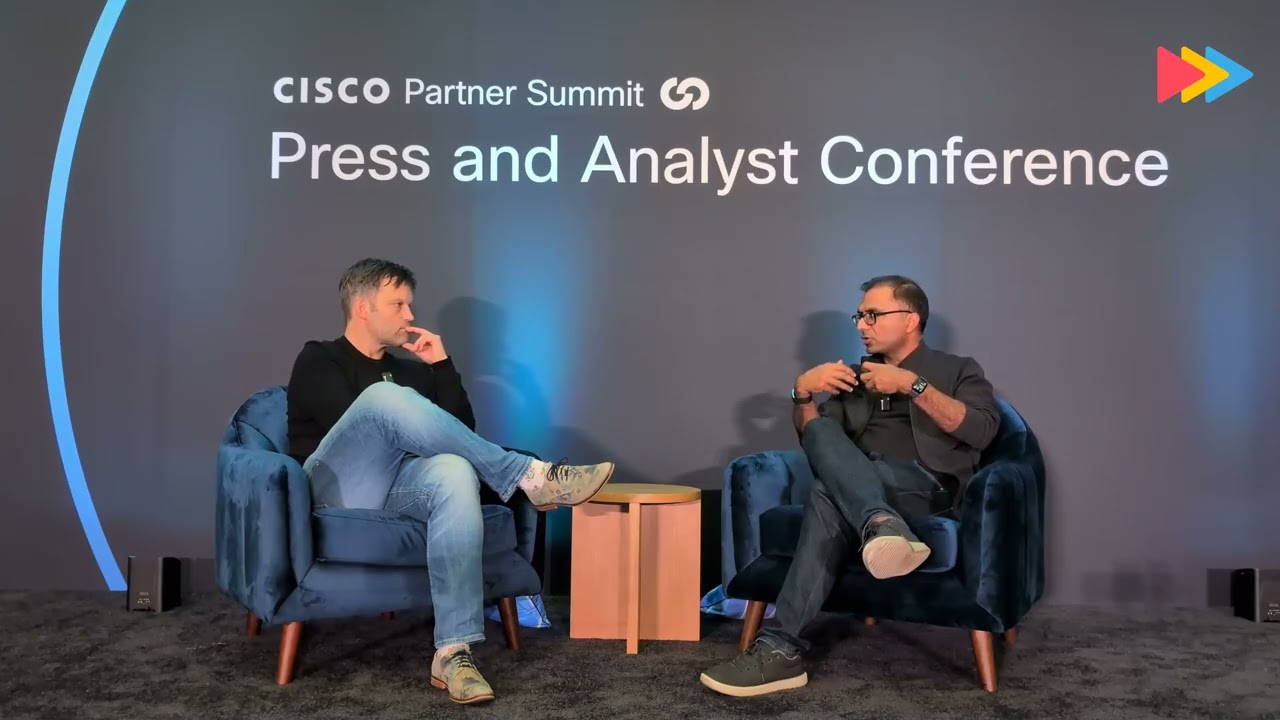
Discover how Cisco is transforming IT operations from reactive troubleshooting to autonomous agentic workflows with AI Canvas and the deep network model.
In this exclusive interview from Cisco Partner Summit in San Diego, DJ Sampath, SVP of AI Software and Platforms at Cisco, reveals the architecture and philosophy behind one of the most significant innovations in network operations. If you’ve been wondering why the industry needs yet another AI buzzword or how agentic ops differs from AIOps, this conversation provides clarity on what’s actually changing in enterprise IT.
Sampath explains the fundamental shift happening as customers move from chatbot-style AI assistance to deploying autonomous agents that execute complete workflows without human intervention. You’ll learn why Cisco believes three specific principles are non-negotiable for agentic operations to succeed, and how the company’s unique approach to building purpose-built models sets AI Canvas apart from generic large language model implementations.
What you’ll discover in this video
This isn’t a surface-level product pitch. Sampath dives deep into the technical architecture of AI Canvas, explaining concepts that matter to network engineers and IT leaders making real purchasing decisions:
- Why autonomous agents are replacing traditional AI chatbots in enterprise deployments
- The three core architectural principles that make agentic operations possible at scale
- How Cisco’s deep network model leverages 30 years of human network engineering expertise
- The crucial difference between real expert data and synthetic training data for AI models
- Why multiplayer collaboration is built into AI Canvas from day zero, not bolted on later
- How the dynamic canvas interface actually works during troubleshooting workflows
- The practical reality of getting started with AI Canvas today versus future capabilities
- Cisco’s approach to vendor neutrality and multi-vendor network environments
From reactive dashboards to proactive agents
One of the most compelling parts of this discussion explores how AI Canvas moves IT teams from jumping between multiple dashboards and CLI interfaces to working with intelligent agents that understand context across your entire network infrastructure. Sampath reveals the current capabilities available in alpha, the roadmap for proactive monitoring and remediation, and how the system will learn from your specific environment over time.
You’ll hear about the integration points with Meraki, Thousand Eyes, Splunk, and ServiceNow, and understand what you can actually do with AI Canvas today depending on which Cisco products you’re already using. The conversation doesn’t shy away from practical questions about prerequisites, licensing requirements, and the minimum viable deployment to see value.
The bigger picture: autonomous L3 operations
Sampath uses an automotive analogy to describe where network operations are heading. We’re going from L1 autonomous driving (deterministic workflows) through L2 (AI-assisted tasks) toward L3 (autonomous reasoning and execution). This video explains how Cisco is building that continuum with Workflows, AI Assistants, and now AI Canvas working together rather than as disconnected point solutions.
For anyone evaluating AI-powered network management solutions or trying to understand what “agentic operations” actually means beyond the hype, this conversation provides the technical depth and practical context you need. Watch the full interview to understand not just what Cisco is building, but why these architectural decisions matter for the future of IT operations.