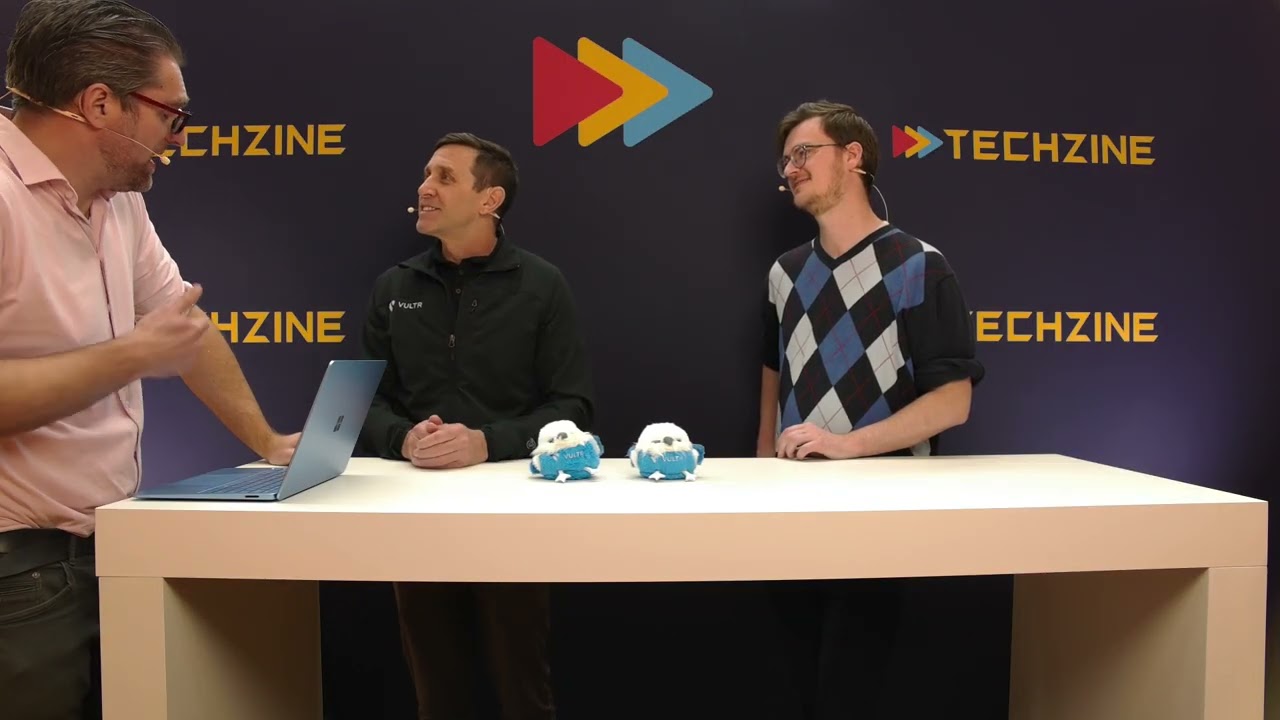
What makes a cloud provider an “alternative hyperscaler” instead of a neo cloud? Vultr’s CMO reveals a strategic positioning that challenges conventional cloud categories and offers enterprises a compelling option for AI infrastructure deployment.
In this KubeCon interview, Kevin Cochrane explains how Vultr combines 14 years of public cloud experience with specialized AI infrastructure across 33 autonomous regions. But the real story goes deeper than marketing positioning, as it touches on critical enterprise concerns from data sovereignty to GPU availability in Europe.
Watch this video to discover why major sovereign cloud discussions in Europe might be overlooking a significant player, and how technical architecture enables capabilities that sound impossible for a company smaller than AWS or Google Cloud.
Key insights revealed in this interview
Cochrane addresses several provocative questions that challenge Vultr’s market position. When pressed on how a US company can guarantee data sovereignty, his answer involves air-gapped control planes and autonomous regional architecture. When asked how Vultr competes against hyperscalers developing custom silicon, he reveals performance-per-dollar metrics that seem almost too good to be true.
The conversation covers:
- Why enterprises need geographically distributed AI infrastructure instead of centralized training clusters
- The specific cost advantages Vultr claims over AWS, Google Cloud, and Azure
- How sovereign cloud deployments work technically, from control plane separation to personnel requirements
- Why neo cloud providers struggle to deploy GPU infrastructure across multiple European regions
- What Nvidia Dynamo does for inference optimization and why it matters for TCO
- The challenge of market visibility when growing rapidly in a crowded space
Questions that produce surprising answers
Some of the most revealing moments come when Cochrane is challenged directly. “You’re still a US company, so how do you guarantee sovereignty as a US company?” The technical answer involves architecture most viewers probably haven’t considered. “Why isn’t Vultr mentioned in European sovereign cloud discussions?” The candid response reveals both challenges and opportunities.
For platform engineers evaluating cloud options, enterprises concerned about data residency, or anyone following the evolution of AI infrastructure, this interview provides perspectives that don’t typically appear in vendor marketing materials.
Who should watch this
This conversation is particularly valuable for technical decision-makers evaluating multi-cloud strategies, platform engineers responsible for AI infrastructure, and anyone interested in how data sovereignty requirements are shaping cloud architecture. Cochrane doesn’t just explain what Vultr does—he articulates why certain architectural decisions matter for enterprises deploying AI applications globally.
The discussion assumes familiarity with cloud concepts but explains technical details clearly enough for viewers to understand the implications even without deep infrastructure expertise.