A fundamental shift in data center power infrastructure is happening right now, and it will determine which facilities can support the next generation of AI workloads.
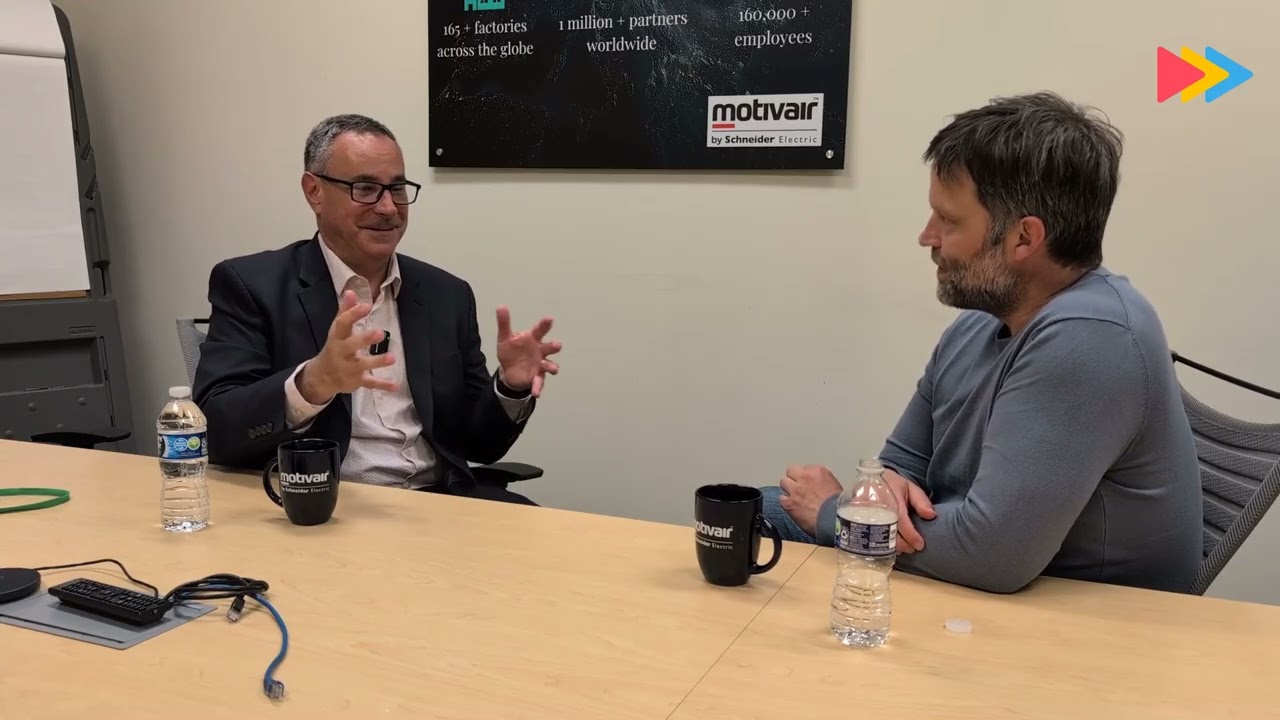
Rob Bunger from Schneider Electric reveals why the industry is abandoning decades-old power distribution standards in favor of a completely new approach borrowed from electric vehicle charging technology. The reason is simple mathematics: current power architectures physically cannot deliver the power that next-generation AI chips demand without consuming all available rack space.
In this detailed technical discussion, you’ll discover exactly why this change is inevitable, how it will be deployed, and what timeline operators should prepare for. The conversation goes deep into the engineering challenges, safety considerations, and practical deployment strategies that will shape data center infrastructure for years to come.
What you’ll learn in this video
Bunger explains the mathematical problem that makes current power distribution impossible at AI-scale densities, walking through real examples of how many power feeds would be required and why that approach breaks down. You’ll understand the specific technical advantages of the chosen voltage level and why other alternatives were considered and rejected.
The discussion reveals deployment strategies including the innovative “sidecar” approach that allows adoption without complete facility rewrites, and how this will evolve toward centralized DC distribution as deployments scale. You’ll learn about the extensive safety testing required, including deliberately creating fault conditions with 50,000 amps of current to verify protection equipment performs correctly.
Bunger also addresses critical operational questions: can existing data centers accommodate these systems? What happens to UPS infrastructure? How do you service high-voltage DC equipment safely? And perhaps most importantly: when will this actually arrive in production environments?
Key topics covered
- Why 48V power distribution cannot scale beyond current AI rack densities
- The specific technical reasons 800V DC was chosen over alternatives
- How sidecar deployment works and why it’s the initial strategy
- The evolution path toward centralized DC distribution systems
- Safety engineering including fault testing and live-swap capabilities
- Software and monitoring requirements for invisible electrical phenomena
- Real deployment timelines and which companies will adopt first
- The broader industry trend toward DC power across multiple applications
This conversation provides the technical depth that infrastructure professionals need to understand one of the most significant changes in data center history. Whether you’re planning for AI deployments, evaluating facility capabilities, or simply trying to understand where the industry is heading, this discussion cuts through the marketing noise to explain the actual engineering realities.
Watch the full interview to understand why 800V DC represents not just an incremental improvement, but a fundamental architectural shift that will separate facilities capable of supporting AI workloads from those that cannot.