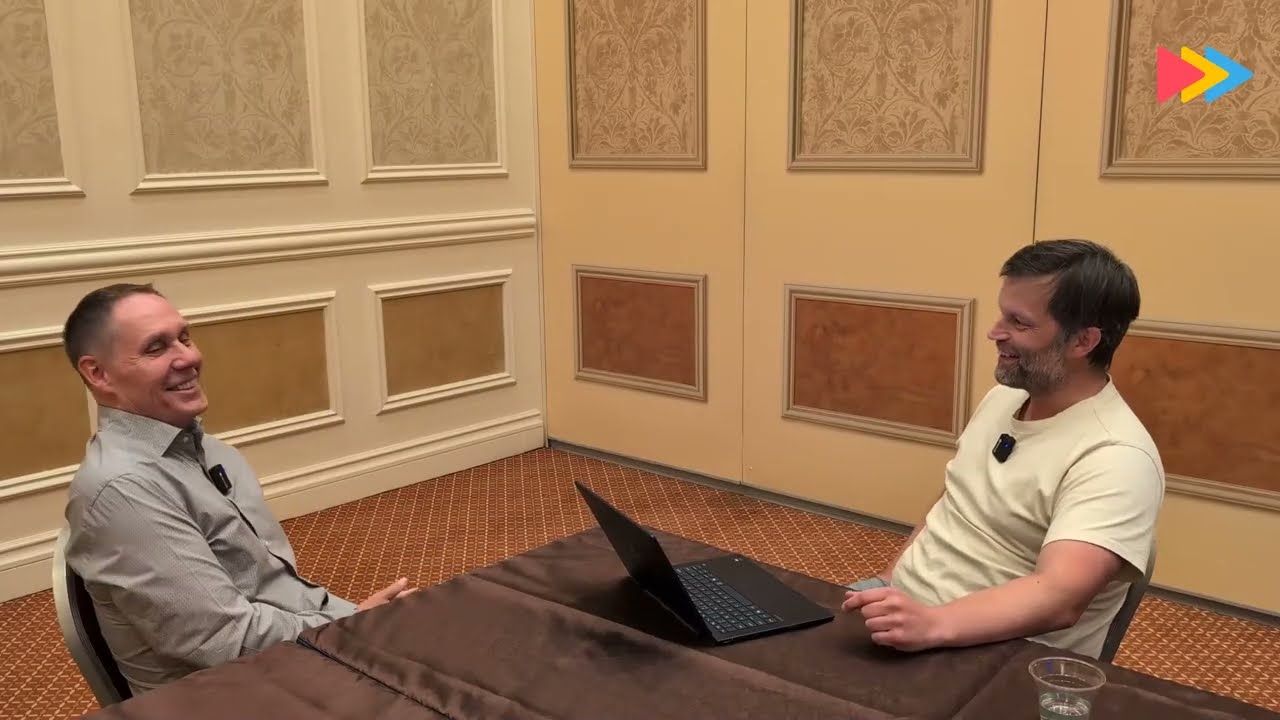
Oracle has made a bold statement by rebranding Cloud World to AI World. But is this just marketing, or does it signal a fundamental shift in cloud infrastructure? Richard Smith, EVP and GM EMEA Cloud Infrastructure at Oracle, reveals the strategic thinking that could change how enterprises approach AI adoption.
In this conversation from Oracle AI World 2025, discover why Oracle believes moving data for AI is becoming obsolete, how 50 years of data management experience positions the company uniquely for the AI era, and what “scale-across” technology means for the future of distributed computing.
Smith doesn’t shy away from controversial topics, including the heated debate around data sovereignty in Europe, why Oracle views regulation as beneficial rather than burdensome, and his candid assessment of government initiatives to build national cloud infrastructures. He also tackles the elephant in the room: is AI a bubble waiting to burst?
What you’ll learn
This interview goes beyond surface-level marketing to explore the technical and strategic decisions driving Oracle’s AI-first transformation. You’ll gain insights into:
Revolutionary infrastructure approaches
Discover how Oracle’s Gen2 cloud architecture was built from a “blank piece of paper” with the benefit of learning from competitors’ mistakes. Find out why delivering 200+ services consistently across every deployment model—from massive public cloud regions to behind-the-firewall implementations—represents a genuine differentiator in an increasingly crowded market.
The data movement problem
Learn why Oracle’s AI data platform challenges the conventional wisdom that you need to move data to specialized systems for AI processing. Smith explains how this approach prevents repeating the “big data” mistakes of the past decade and why keeping data in place while enabling AI access could become the industry standard.
Financial scale and customer commitment
Get the inside story on Oracle’s phenomenal growth trajectory, including the significance of “remaining performance obligations” potentially exceeding half a trillion dollars. Understand what these long-term customer commitments really mean for Oracle’s position in the AI infrastructure race.
Database evolution for AI
Explore how vectorization has become a native database feature in Oracle 23 AI (being rebranded as the AI Database), supporting relational, JSON, structured, and unstructured data within a single environment. But there’s a catch—Smith reveals the “very expensive” challenge that comes with vector embeddings.
Scale-across
Move beyond traditional scale-up and scale-out concepts to understand how Oracle is enabling workloads to span multiple data centers. Learn about the Abilene project and why accepting a few seconds of latency might actually be “pretty clever technology” when it maintains data currency across geographies.
The sovereignty paradox
Smith provides a refreshingly frank perspective on European data sovereignty concerns, DORA compliance requirements, and why he personally struggles to understand the value of government-built cloud infrastructure. Discover why Oracle considers regulation “our friend” despite the massive compliance costs involved.
AI bubble or fundamental shift?
Addressing Sam Altman’s comments about “bubbly elements” in AI, Smith offers a nuanced view that distinguishes between financial concerns, psychological concerns, and Oracle’s unique positioning based on 50 years of data management. Will there be market consolidation? Absolutely. Is AI itself a bubble? Watch to find out why Smith disputes that characterization.
Key moments
• Why Oracle believes the distinction between training and inferencing is becoming obsolete
• The exact moment when AI shifted from exciting possibility to business imperative
• How Oracle is working directly with European regulators to define DORA compliance processes
• Why every company calling itself an “AI provider” signals coming consolidation
• The infrastructure investments required to compete in AI (hint: it’s “billions of dollars”)
• What Oracle’s complete stack—from hardware through agentic tools—really means for customers
This isn’t a polished corporate presentation. It’s a substantive technical and strategic discussion that reveals the challenges, opportunities, and genuine differentiators in enterprise AI infrastructure. Whether you’re evaluating cloud providers, planning AI initiatives, or simply trying to understand where the industry is heading, this conversation provides insights you won’t find in press releases or analyst reports.