IFS held its first dedicated AI event, unveiling strategic partnerships that could reshape how enterprise software integrates with artificial intelligence and physical robotics—and the implications for industrial operations are profound.
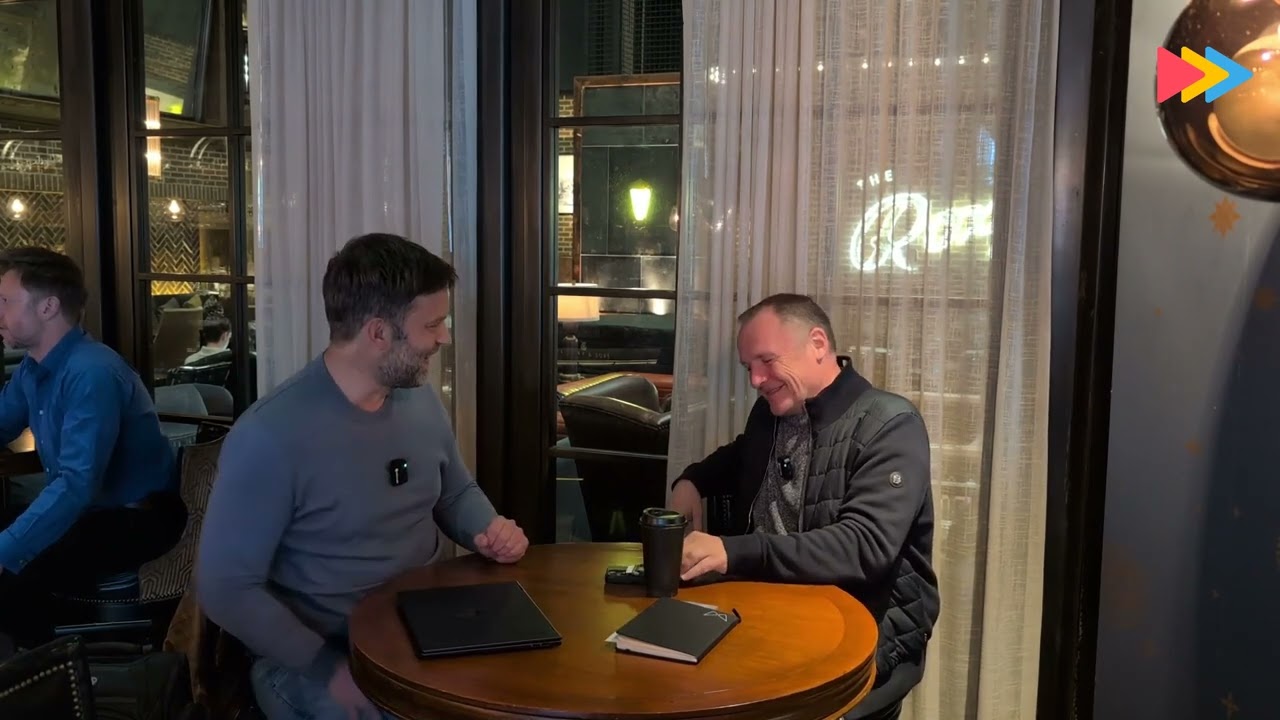
Christian Pedersen, Chief Product Officer at IFS, sat down with us to discuss partnerships with Anthropic, Boston Dynamics, 1X Technologies, and Siemens that go far beyond typical vendor relationships. These collaborations represent a fundamental shift in how enterprise software companies approach AI implementation, particularly for industrial and manufacturing customers.
Watch the full interview to discover how these partnerships will transform enterprise operations, from predictive maintenance to autonomous inspections to humanoid workforce integration.
What you’ll learn
Pedersen reveals IFS’s philosophy of becoming the “conduit” between cutting-edge AI technology and industry-specific applications. Rather than building everything in-house, IFS strategically partners to deliver capabilities that would take years to develop independently.
Key topics covered:
- Why IFS co-developed Resolve with Anthropic rather than building proprietary language models
- How the three-level intelligence architecture combines public LLMs, private industry models, and customer data
- Real-world demonstration of Boston Dynamics Spot integrated into enterprise workflows
- The technical capabilities that detected $8.4 million in annual savings at a single Williams Grant site
- Why humanoid robots from One X will target manufacturing floors by 2026
- How IFS maintains customer control over AI deployments despite daily update cycles
- The skilled labor shortage driving physical AI adoption in utilities and energy sectors
- Design considerations for human-robot interaction and the deliberate choice not to create human-like faces
Beyond surface-level AI integration
This isn’t a discussion about adding chatbots to enterprise software. Pedersen explains how robots become integrated workforce members, working alongside humans and digital agents with shared contextual intelligence. You’ll learn why this approach differs fundamentally from traditional automation.
The interview also addresses practical concerns about AI implementation: How do companies test updates? What happens when Anthropic releases new capabilities? How do customers maintain control while benefiting from rapid innovation? Pedersen provides specific answers about MCP server architecture, deployment timelines, and customer governance.
Physical AI applications
Discover capabilities that go beyond visual inspections. Patterson describes hypersonic microphones that detect leaks humans cannot hear, including issues in voltage transformers that could triple power consumption. Learn why different robot form factors serve different purposes and which applications make sense for wheeled robots versus humanoids.
The discussion also covers unexpected applications: how consumer robot development for household tasks translates to manufacturing dexterity, why utilities companies are among the most eager adopters, and what generational differences reveal about long-term robot acceptance.
Strategic insights for enterprise decision-makers
Pedersen shares his recommended approach for customers evaluating AI investments: paint a vision of your future business state, then take pragmatic steps toward that goal while avoiding “blind alleys” that don’t advance strategic objectives.
Watch the complete interview to understand how these partnerships will reshape enterprise operations and what timeline you should expect for different AI capabilities reaching production environments.