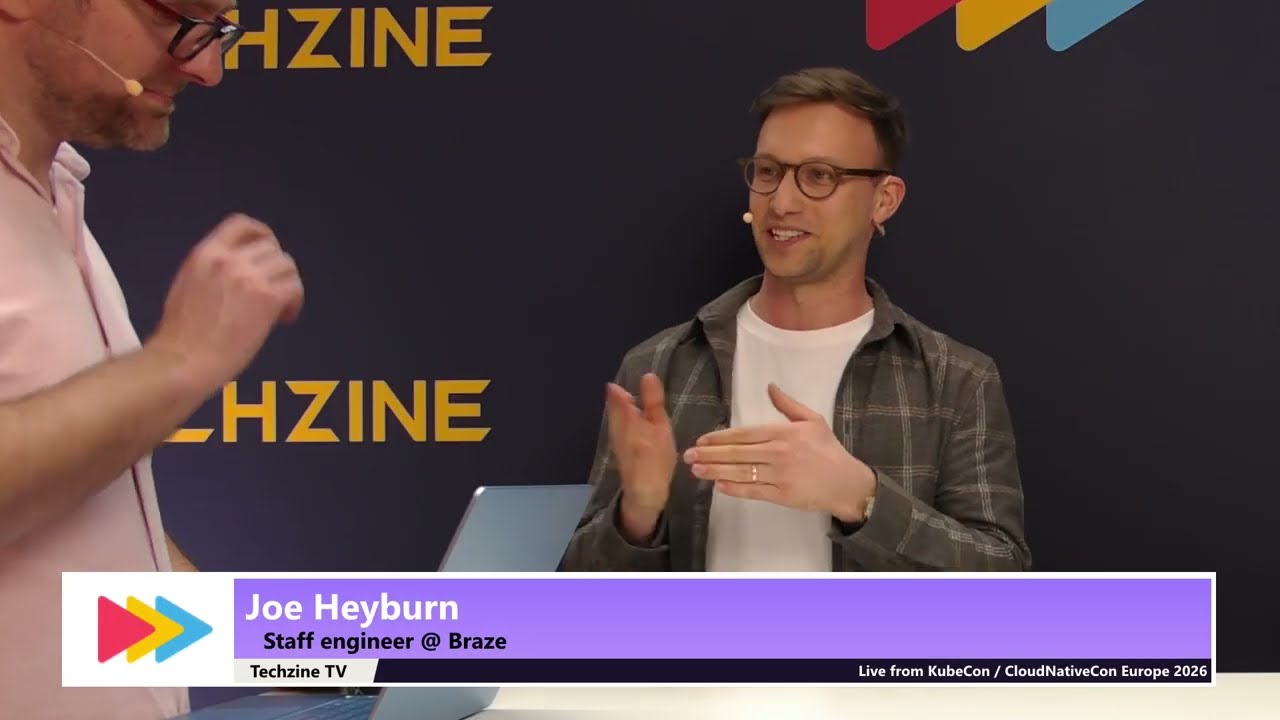
How do you migrate a production database handling millions of daily messages without a single second of downtime? A staff engineer from Braze reveals the surprisingly simple process in this KubeCon interview.
When Redis changed its licensing model, organizations faced a crucial decision. Braze, a customer engagement platform processing massive volumes of messages for marketing campaigns, chose to migrate to Valkey, the Linux Foundation’s open-source fork of Redis. But they didn’t just switch databases; they simultaneously moved from EC2 to Kubernetes, fundamentally transforming their infrastructure operations.
In this interview, Joe Heyburn from Braze walks through the technical decisions, alternative evaluations, and migration process that achieved zero downtime. You’ll discover why backward compatibility made the transition remarkably straightforward, how Kubernetes enabled faster operational velocity, and what challenges remain for day-two operations at scale.
In-memory database migration
The interview covers strategic and technical aspects of modern database migrations in cloud-native environments. Heyburn explains the evaluation criteria used to compare Valkey with alternatives such as Dragonfly DB, revealing the trade-offs between safety and performance in production systems.
You’ll hear about the surprising simplicity of the actual migration process, it involved changing container image names and version tags. But you’ll also understand why that simplicity was only possible because of careful planning and the right platform choices.
Key topics explored
- Why Redis’s licensing change prompted Braze to evaluate alternatives despite not being directly affected
- The benchmarking process that confirmed Valkey as the right choice
- How Kubernetes transformed operational velocity compared to Chef-managed EC2 instances
- Technical details of achieving zero downtime during the database migration
- Comparing roadmaps: where Valkey and Redis are heading differently
- Why Dragonfly DB impressed but didn’t win for this use case
- The community-driven Kubernetes operator being built for day-two Valkey operations
- Practical recommendations for organizations planning similar migrations
Why this matters for your infrastructure
This isn’t just another migration story, it’s a blueprint for how organizations can respond to open-source licensing changes without compromising on reliability or performance. The interview demonstrates that major infrastructure transformations don’t require months of downtime or risky big-bang deployments.
Whether you’re currently running Redis, evaluating database options, or planning Kubernetes migrations, this conversation offers concrete insights from a team managing production systems at significant scale. The discussion of the community Kubernetes operator also provides a glimpse into where Valkey tooling is headed.
Watch the full interview to understand not just what Braze did, but why they made specific choices and what they learned along the way. The practical advice for different workload types—ephemeral versus stateful—will help you plan your own migration timeline if you’re considering a move to Valkey.