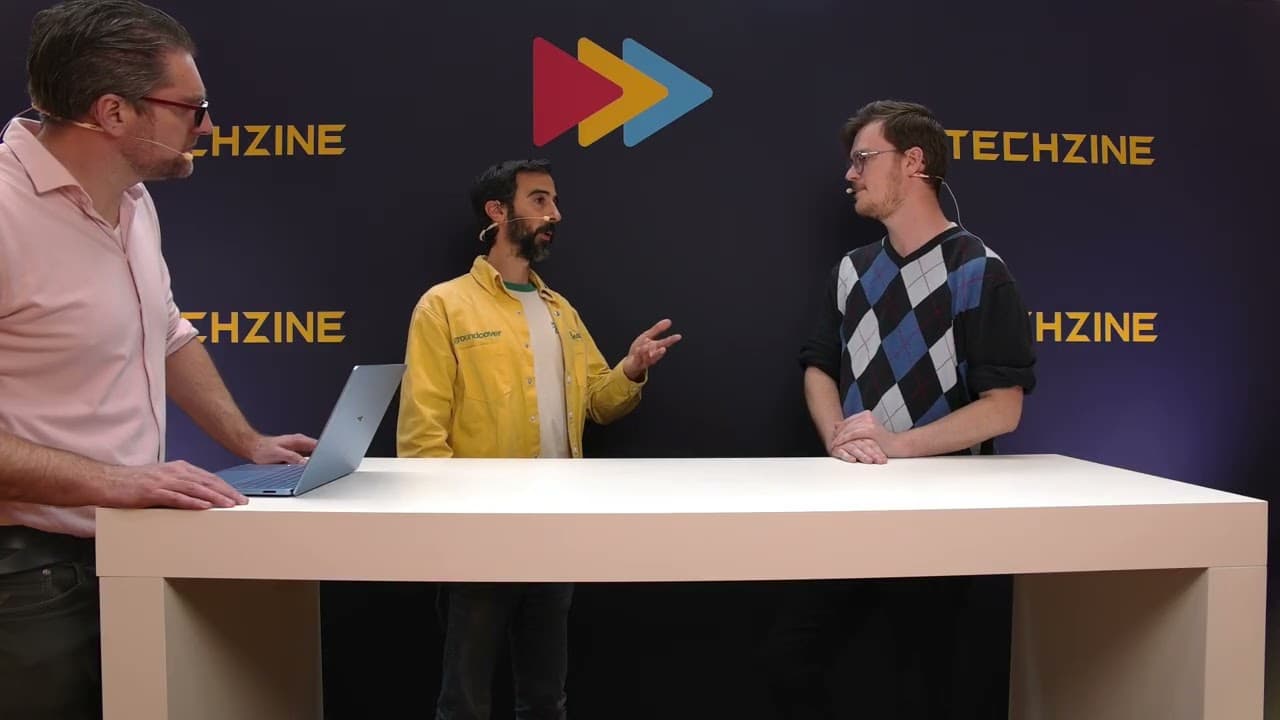
Discover how groundcover is revolutionizing observability for the AI era with EBPF technology and autonomous AI agents that bridge the gap between production monitoring and development workflows.
In this exclusive interview from KubeCon and CloudNativeCon, groundcover CEO Shahar Azulay reveals the company’s approach to tackling the exploding complexity of monitoring modern cloud-native and AI workloads. Learn how their newly released AI agent mode is changing the game for organizations struggling with traditional observability limitations.
If you’re dealing with the challenges of monitoring AI workloads, managing telemetry costs, or trying to maintain visibility as your team ships AI features rapidly to production, this conversation offers practical insights into emerging solutions that address these exact pain points.
What you’ll learn from this video
Azulay explains how observability is evolving from a reactive troubleshooting tool into the foundational infrastructure that powers AI-driven development. You’ll discover why traditional APM platforms struggle with AI workloads and what architectural approaches can solve these challenges while maintaining data privacy and cost control.
The discussion reveals fascinating details about how EBPF technology enables telemetry collection without manual instrumentation—a critical capability when development teams prioritize speed-to-market over operational setup. You’ll learn why this matters even more in the age of AI adoption and how it enables governance without creating bottlenecks.
Key topics explored in the interview
- How bring-your-own-cloud architecture changes the economics and privacy equation for observability platforms
- Why monitoring a two-hour AI agent session with 50,000 spans requires completely different tooling than traditional APM
- The role of autonomous AI agents in creating feedback loops between production observability and coding agents
- How organizations can govern AI usage and track token consumption across teams without requiring developer instrumentation
- Why the lines between observability, security, and cost management are blurring and what that means for platform teams
- Practical migration strategies from legacy observability vendors like Datadog, Grafana Cloud, and New Relic
- The shift from static dashboards and pre-configured monitors to dynamic, AI-powered anomaly detection
Why this matters for cloud-native teams
If you’re responsible for observability, SRE, or platform engineering in an organization adopting AI capabilities, this interview addresses challenges you’re likely facing right now. Azulay shares specific examples of problems customers encounter—from not knowing which LLMs their teams are using to lacking visibility into whether their AI features are even working correctly in production.
The conversation goes beyond surface-level product announcements to explore fundamental shifts in how observability data will be consumed by AI systems across the development lifecycle. You’ll gain perspective on where the industry is heading and how to position your observability strategy for this emerging reality.
Watch the full interview to understand how EBPF, bring-your-own-cloud architecture, and agentic AI are converging to create a new paradigm for observability in cloud-native environments.