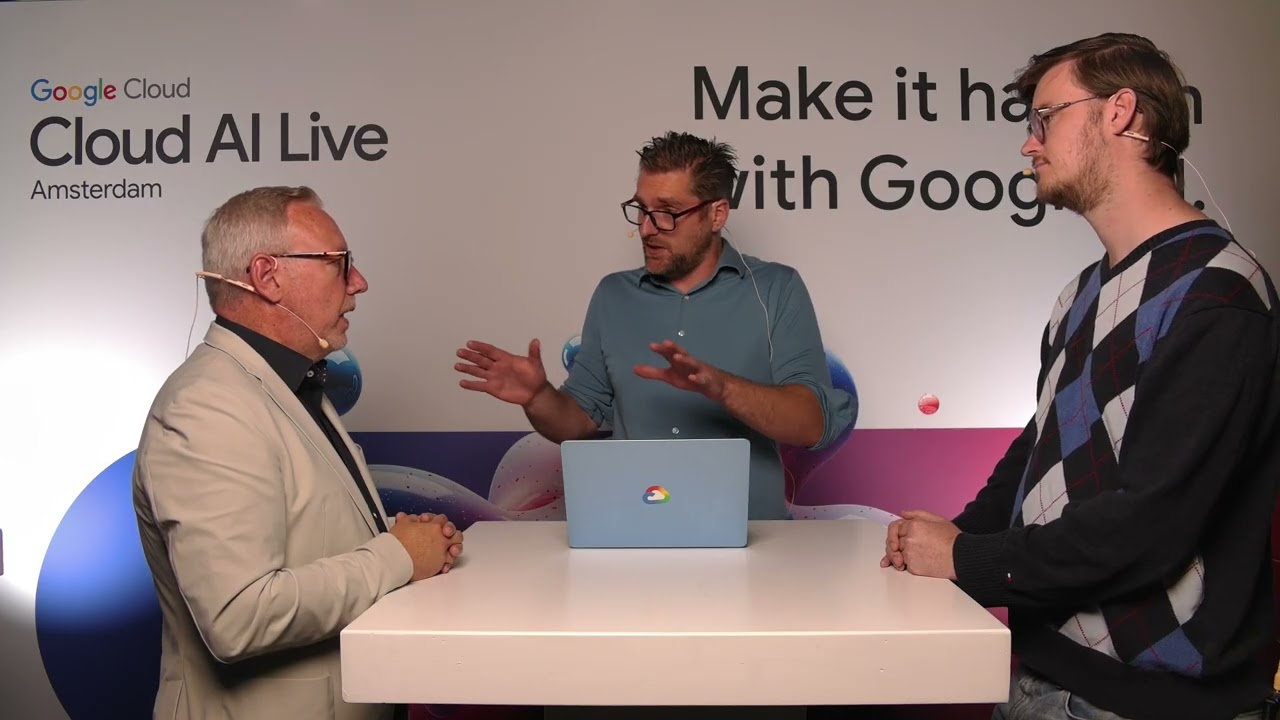
During Google Cloud AI Live in Amsterdam, we spoke with Kurt Rommens, head of government and public sector Benelux at Google Cloud. Rommens explains why public sector organizations move more carefully than commercial enterprises when adopting AI, and why that measured approach is the right one. From fragmented decision-making to the risk of shadow AI, the conversation covers the unique challenges governments face on their AI journey.
Rommens shares striking numbers on the economic value AI could unlock for governments. Take, for example, the 4 billion euros in annual savings for Belgium, he also highlights which countries are setting the pace in Europe and beyond. He points to Luxembourg and Singapore as standout examples of nations with clear AI strategies, dedicated funding, and a dual focus on both public sector efficiency and startup ecosystem growth.
The interview also dives deep into digital sovereignty, a topic Rommens says has become a boardroom-level conversation across government and regulated industries. Google Cloud’s layered response to sovereignty concerns is explained in detail, from software controls and external key management, to the Thales/S3NS partnership in France, and finally the air-gapped Google Distributed Cloud deployments used by organizations like NATO, the Bundeswehr, and UK Defense. Even the availability of Gemini on air-gapped environments for organizations that need the latest AI innovation without any public cloud exposure is discussed.
Key takeaways:
• Governments are lagging behind commercial organizations in AI adoption, but for legitimate reasons
• 66% of government employees are still not using AI technology in their work
• Shadow AI is a real and growing risk in the public sector
• Belgium could save over €4 billion annually by embracing AI across government
• Luxembourg invested €3 billion in AI government budget and €300 million to support AI startups
• 60,000 new jobs were created in AI startups in Luxembourg last year
• Gartner predicts 70% of businesses will have a sovereign strategy by 2030
• Google Cloud offers layered sovereignty: software controls, S3NS (Thales partnership), and air-gapped GDC
• Gemini is now available on Google Distributed Cloud air-gapped environments
• NATO, the Bundeswehr, and UK Defense have publicly confirmed GDC air-gap deployments
Chapters:
0:11 – AI adoption in government and public sector
1:10 – Why governments lag behind on AI adoption
3:36 – Shadow AI risks and secure adoption for employees
4:59 – Which countries lead in government AI adoption
6:46 – Digital sovereignty as a boardroom priority
8:40 – Google Cloud’s sovereign cloud solutions explained
11:16 – Gemini on Google Distributed Cloud air-gapped
13:15 – Real-world deployments: NATO, Bundeswehr and UK Defense